How Much Cash to Carry in Turkey: UK Traveller Rules of Thumb (Simple, Safe, Stress-Free)
Not sure how much cash to carry in Turkey as a UK traveller? Use this calm, practical approach: go card-first, keep a small daily cash amount for convenience and tips, top up when needed, and avoid “pay in pounds” prompts at terminals/ATMs. Includes checklists, copy-paste lines, and FAQs.
Hızlı Özet
- • best places to visit
- •Local restaurant and cafe recommendations
- •Accommodation options and price ranges
- •Transportation info and tips
Table of Contents
Quick answer: The easiest cash plan in Turkey is “card-first + small cash buffer”. Use your card for most everyday spending, carry a small amount of cash for tips and quick purchases, and top up calmly when you need to — rather than carrying a lot on you. Your goal is convenience, not a bulky wallet.
The UK-friendly cash mindset for Turkey
Turkey is a modern, well-travelled destination. You don’t need a complicated money strategy — you need a routine that’s easy to repeat.
- Card-first for most spending
- Cash for convenience (small purchases, tips if you choose, quick moments)
- Top up only when needed
Simple rule: Carry what you’d be comfortable losing without ruining your day — and keep the rest secure.
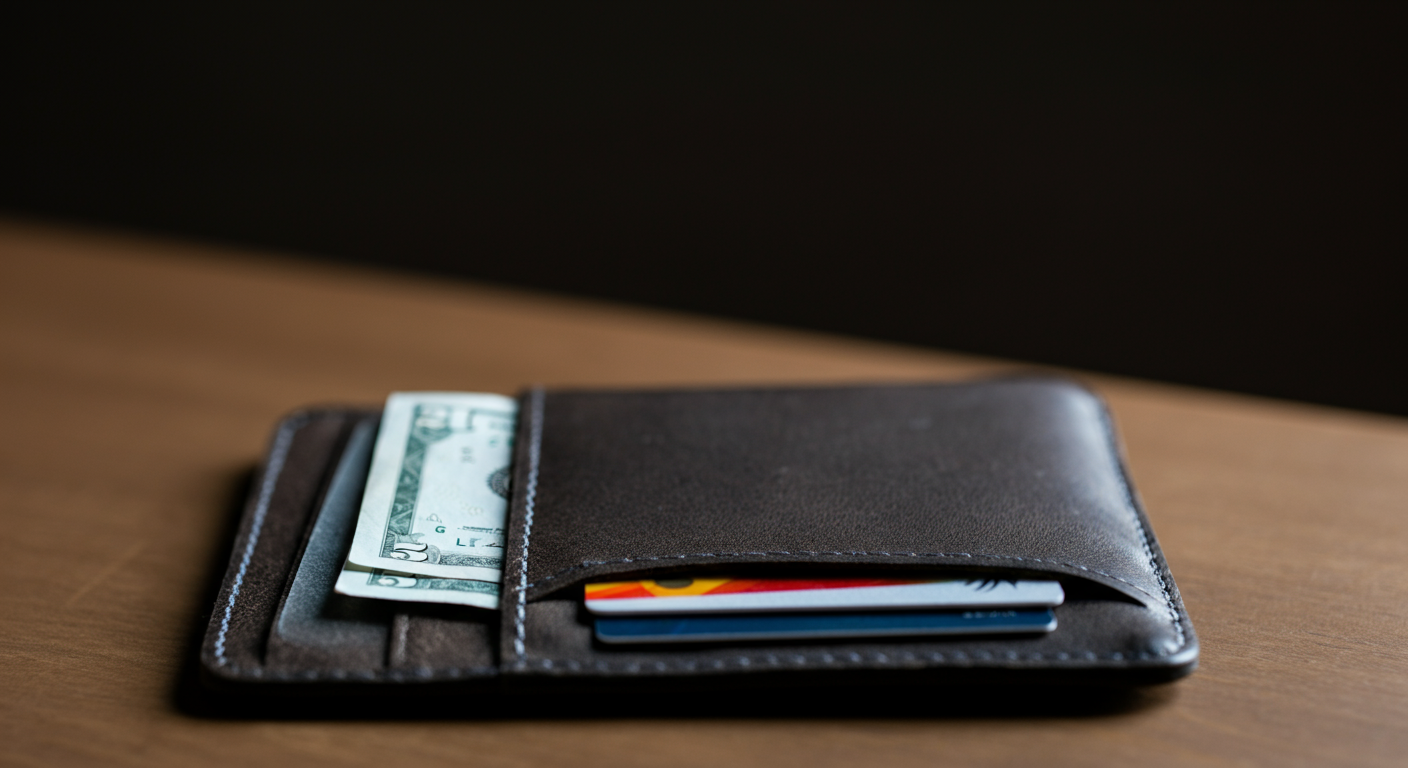
Start here: pick your “cash comfort level”
Instead of chasing a magic number, choose a style that matches your trip.
1) City break cash style (lots of moving around)
- Carry small cash for quick stops (snacks, small purchases, tips)
- Use card for most meals and larger spending
- Top up when it’s convenient (not when you’re rushed)
Pair with: Public Transport in Turkey for UK Tourists
2) Resort holiday cash style (predictable days)
- Cash is mainly for tips (if you choose) and off-site days
- Card covers bigger extras (spa/activities/shopping)
- Top up on your schedule (not daily)
Pair with: Tipping in Turkey for UK Travellers
3) Family cash style (convenience-first)
- Carry a little extra “convenience cash” for snacks and quick fixes
- Keep your main funds card-first
- Split money between adults (so one lost wallet doesn’t disrupt the day)
UK-friendly tip: Families do best with a “boring” system: one adult holds the main card, the other holds the backup card.

What you’ll actually use cash for in Turkey
Cash works best for small, fast moments. For most UK travellers, that’s:
- Small purchases where you want speed
- Tips (if you choose to tip)
- Quick taxis or short rides in some situations
- Little add-ons: water, snacks, convenience items
Simple rule: If it’s a “small and fast” moment, cash is useful. If it’s a “bigger and planned” spend, card is usually easier.
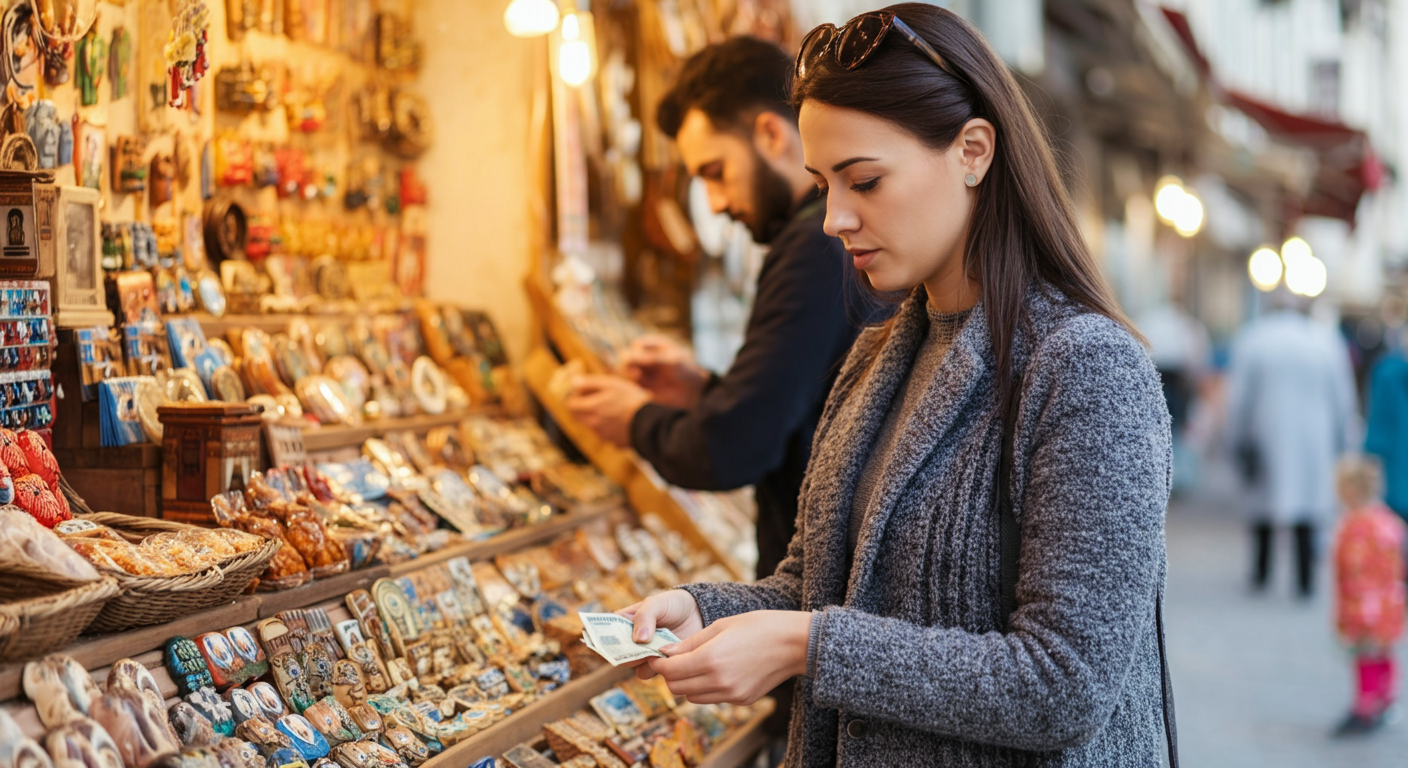
How to top up cash without stress (the calm rhythm)
The biggest money mistake on holiday is turning “cash” into a daily task. Instead, use a simple rhythm.
- Do your first top-up when you’re calm (not straight off the plane)
- Withdraw fewer times rather than lots of small withdrawals
- Keep notes/coins handy so you’re not constantly searching for change
For the full setup, use: Using Cards, Cash & ATMs in Turkey
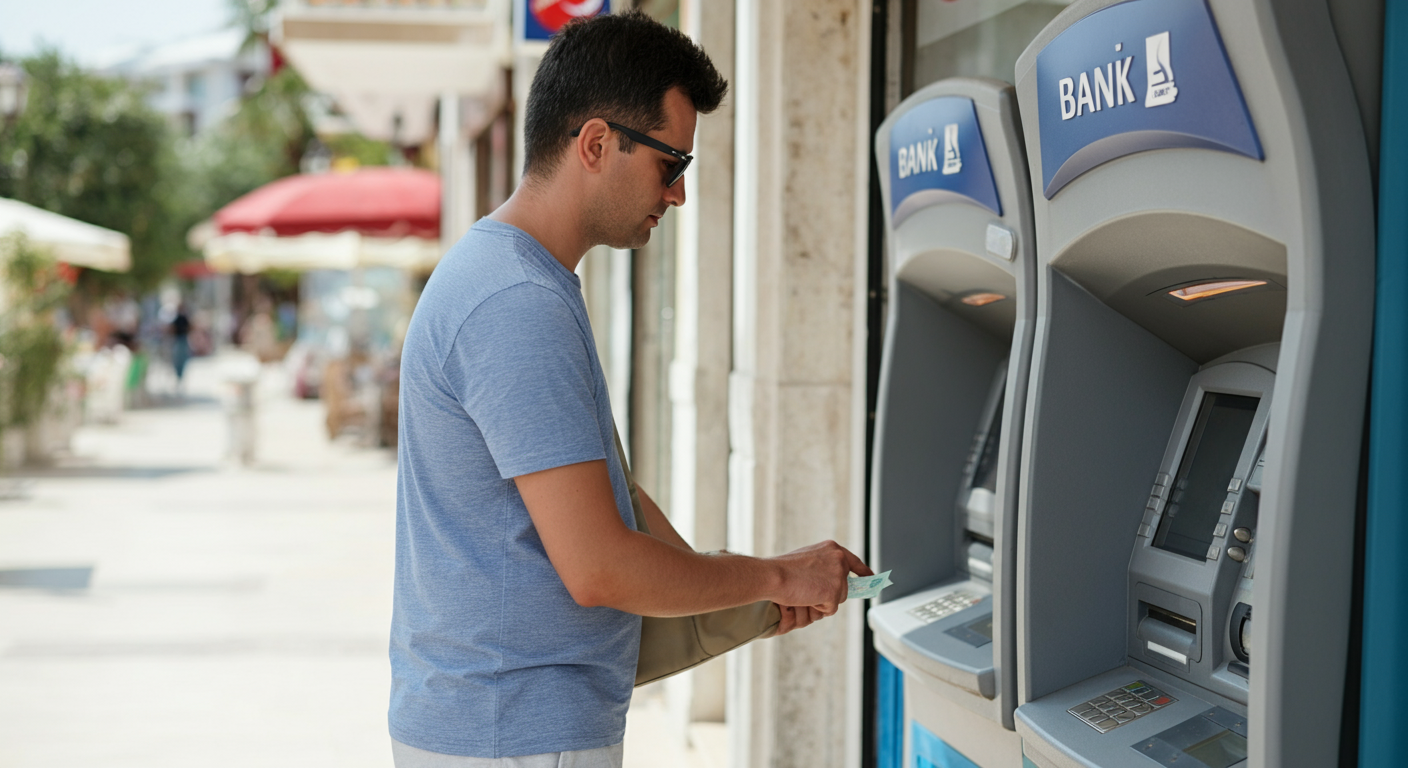
The “pay in local currency” habit (avoids surprises)
Sometimes a card terminal or ATM may offer to charge you in your home currency. For clarity, many travellers prefer to pay in the local currency so conversion happens via their card/bank terms.
Simple rule: When given a currency choice, choose the local currency.
Copy-paste lines (use them anywhere)
- “Local currency, please.”
- “Please charge in lira.”
- “No conversion, thank you.”
Where to keep your money (simple, low-effort organisation)
The best system is the one you’ll actually follow:
- Daily cash: in an easy-to-reach pocket/wallet section
- Main card: with you, but not mixed with all cash
- Backup card: stored separately (different bag/pocket)
- Extra cash: kept securely, not carried day-to-day
UK-friendly tip: Don’t keep everything in one place. One simple split prevents 99% of money stress.
Arrival day: the smartest cash move
Your arrival day goal is comfort. Keep it easy:
- Make sure you can pay immediately (card + a small cash buffer)
- Don’t do multiple money tasks on day one
- If you need cash, do one calm top-up when you’re settled
Pair with: Turkey Tourist Basics for Brits: Documents & Arrival Day

Big cash amounts: keep it compliant and calm
Most holidays don’t involve carrying large amounts of cash. If you ever do, check declaration rules for both ends of your journey (UK and Turkey) and keep documentation tidy.
Simple rule: If it’s a “large cash” situation, do the 2-minute admin check — it keeps everything smooth.
Copy-paste: your “Turkey cash plan” template
- Trip type: [City / Resort / Mixed]
- Daily cash purpose: [Tips / small purchases / convenience]
- Cash rhythm: “Top up when calm, not daily”
- Main card: [WITH ME]
- Backup card: [STORED SEPARATELY]
- Currency choice habit: “Local currency every time”
FAQ: cash in Turkey for UK travellers
How much cash should I carry day-to-day in Turkey?
Carry a small, sensible amount for convenience and tips (if you tip), and use your card for most spending. Top up when needed rather than carrying a lot.
Should I rely on cash or card in Turkey?
For most travellers, card-first is easiest, with cash as a convenience backup. This keeps your spending smooth without overthinking.
What’s the simplest way to avoid conversion surprises?
When asked to choose a currency at a terminal or ATM, choose the local currency. It keeps comparisons clearer.
How do I make my money feel “safe and easy” without being anxious?
Use a simple split: daily cash + main card on you, backup card stored separately, and extra cash kept secure. Then stop thinking about it and enjoy Turkey.
Do I need to bring lots of cash from the UK?
Most travellers don’t. A card-first approach plus a small cash stash for convenience is usually the easiest setup. If you prefer arriving with a little cash for peace of mind, keep it modest.
What if I’m carrying a large amount of cash?
Check declaration rules for the UK side and the Turkey side before travel, and keep any paperwork/receipts tidy. For the UK, there are clear declaration requirements above a set threshold.

Melis Yıldız
Editör"Modern konfor ve estetik detaylara önem veren Melis, lüks oteller ve tasarım butik konaklamalar üzerine uzmanlaşmıştır."


Guides About
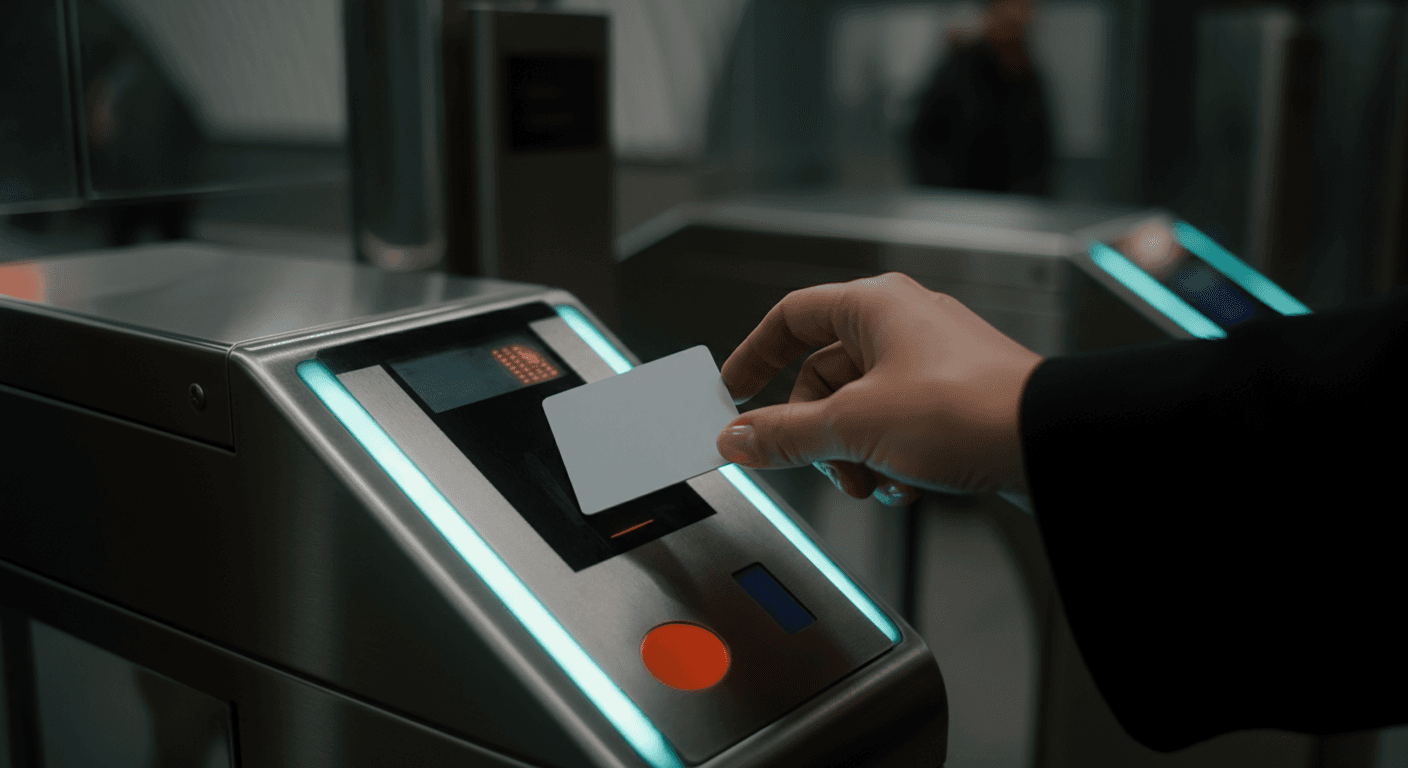
Istanbul Public Transport Guide: Istanbulkart, Metro, Tram & Ferry Explained
İstanbul'da ulaşım karmaşasına son verin! İstanbulkart, metro, tramvay, otobüs ve feribot gibi toplu taşıma ağlarını kolayca anlayın.
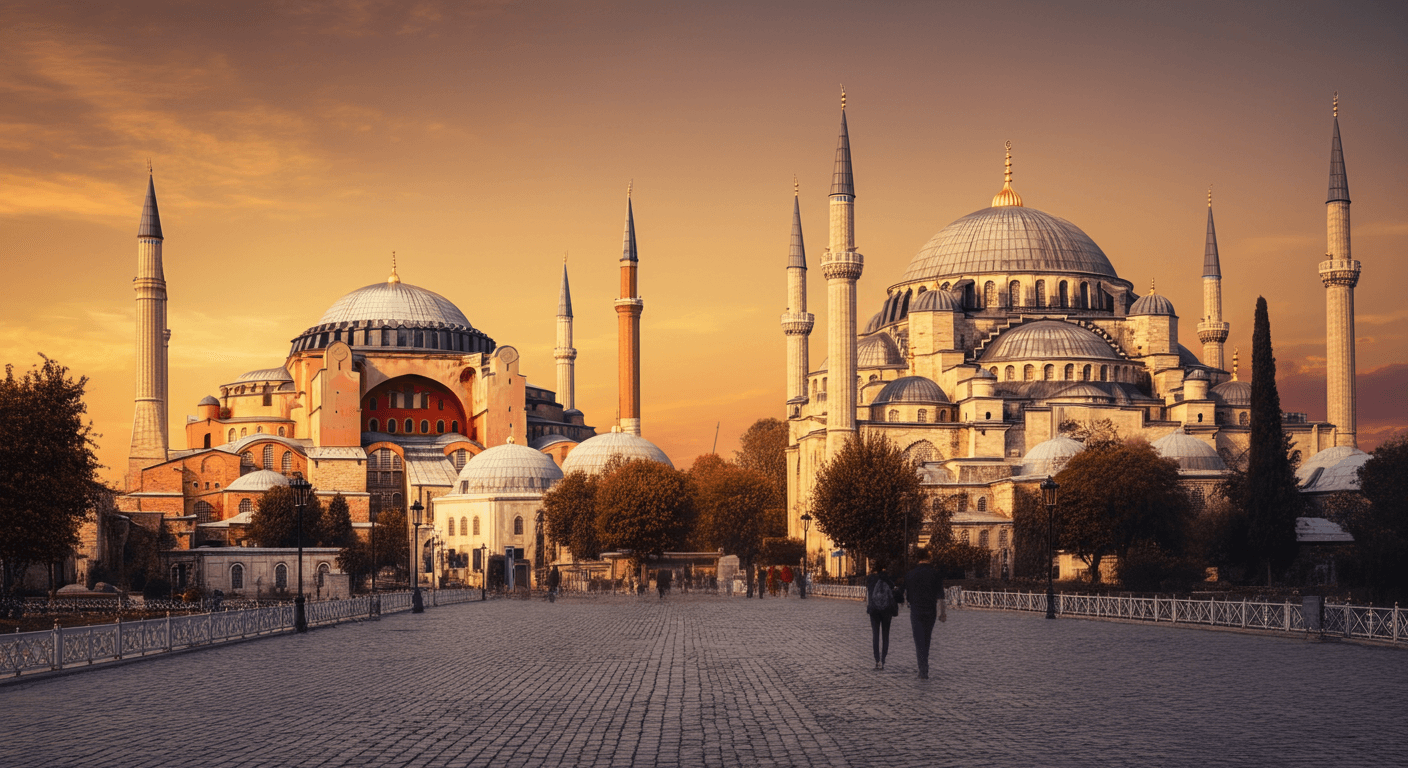
Best Istanbul Photo Route: 1-Day Viral Shots (Golden Hour & Crowd Strategy)
İstanbul'un en viral fotoğraf noktalarını keşfedin! Boğaz, Galata ve Tarihi Yarımada'da 1 günde, ışık saatleri ve kalabalık stratejileriyle mükemmel kareler yakalayın.

Istanbul Budget Planner: Economical, Balanced & Comfortable Spending Modes Guide
İstanbul gezinizi bütçenize uygun planlayın! Ekonomik, dengeli veya rahat modlarla harcama mantığını keşfederek şehri doyasıya yaşayın.
Istanbul with Kids Guide: Baby & Toddler Checklists | Hot Weather & Rainy Day Plan
İstanbul'da çocukla gezmek artık çok kolay! Bebek/çocuk kontrol listeleri ve öğle sıcağı/yağmur için özel İstanbul gezi planları bu rehberde.
Istanbul Walkable Neighborhoods: 2-3 Hour Walking Routes & Map Guide
İstanbul'un en güzel semtlerini yürüyerek keşfedin! Tarihi yarımada ve Boğaz çevresindeki 2-3 saatlik mini rotalarla şehri deneyimleyin.

Istanbul Mosque Guide for Tourists: Dress Code, Photography & Prayer Times
İstanbul camilerini ziyaret edecek turistler için giyim, saat ve fotoğraf kuralları rehberi. Cami ziyaretinizden önce bilmeniz gereken tüm detayları basitçe öğrenin.

Istanbul Travel Tips: Avoid Scams & Surprises (Taxis, Restaurants, Tours)
İstanbul'da taksi, menü ve tur sürprizleri yaşamadan güvenle gezmek için basit kuralları keşfedin. Dolandırılmadan keyifli bir İstanbul deneyimi için ipuçları burada.

Istanbul Evening Guide: Safe & Fun Activities & Plans for Families, Couples & Solo Travelers
İstanbul'da akşam ne yapılır? Aile, çift veya tek kişi için Boğaz turu, tarihi mekanlar ve güvenli eğlence seçenekleriyle dolu rehberimizi keşfedin.
Istanbul Rainy Day Itinerary: Indoor Museums, Bazaars & Cafes
İstanbul'da yağmurlu havalarda sıkılmayın! Müzeler, tarihi çarşılar ve şirin kafelerle dolu kapalı mekan rotalarıyla keyifli bir gün geçirin.

Istanbul Sunset Spots: Crowd-Free Hours & Best Sunset Walk Routes
İstanbul'da kalabalıktan uzak gün batımı noktaları ve Boğaz'da eşsiz sunset walk rotalarıyla şehrin büyüsüne kapılın.
Istanbul 1-Day Itinerary: Europe to Asia Route (Hour-by-Hour & Walking Guide)
İstanbul'da bir günde Avrupa'dan Anadolu'ya geçiş rotasını keşfedin! Saat saat planlanmış bu eşsiz gezi rehberiyle iki kıtayı yürüme seviyenize göre deneyimleyin.

Sabiha Gökçen (SAW) to Istanbul Transfer: Easiest Options Guide
Sabiha Gökçen (SAW) havalimanından İstanbul şehir merkezine en kolay ulaşım (metro, Havabüs, taksi) seçeneklerini ve saatinize göre en mantıklı yolu keşfedin.

Istanbul Airport (IST) Transfer Guide: Taxi, Metro, or Private for Late Night Arrivals
İstanbul Havalimanı (IST) gece varışı için taksi, metro veya özel transfer mi? İstanbul'a en hızlı ve konforlu ulaşım seçeneğini keşfedin.

Istanbul Public Transport Guide: Metro, Tram and Ferry Logic
İstanbul'da ulaşımı çözün! Turistler için İstanbulkart nasıl alınır, T1 Tramvay, M2 Metro ve vapur kullanımı, taksi tuzaklarından korunma rehberi.

First Time in Istanbul: 3–5–7 Days Ready Itinerary
İstanbul'u yorulmadan ve kaybolmadan gezmek isteyenler için saat saat planlanmış, en verimli 3 günlük, 5 günlük ve 7 günlük hazır turistik gezi rotası.

Where to Stay in Istanbul? Area & Base Selection Guide
İstanbul'da ilk kez nerede kalınır? Sultanahmet, Karaköy, Taksim, Beşiktaş ve Kadıköy bölgelerinin detaylı, artı-eksi analizli, ulaşım odaklı konaklama rehberi.

Best Instagram and Photo Spots in Fethiye Route
Ultimate Fethiye Instagram and photography SEO guide list. Find the best spots: Butterfly Valley viewpoint cliff, Babadag glass terrace, and Ghost Town.

Fethiye Budget Planner: Travel Costs and Saving Tips
Ultimate SEO Fethiye holiday budget planner. Is Fethiye expensive? Guide to food prices, transport, boat trips, and saving tips for smart travelers.

Fethiye with Kids: Family Holiday Travel Guide
Ultimate family SEO travel guide to Fethiye with kids and toddlers. Best shallow beaches, stroller-friendly hotels, and safe family boat trips listed.
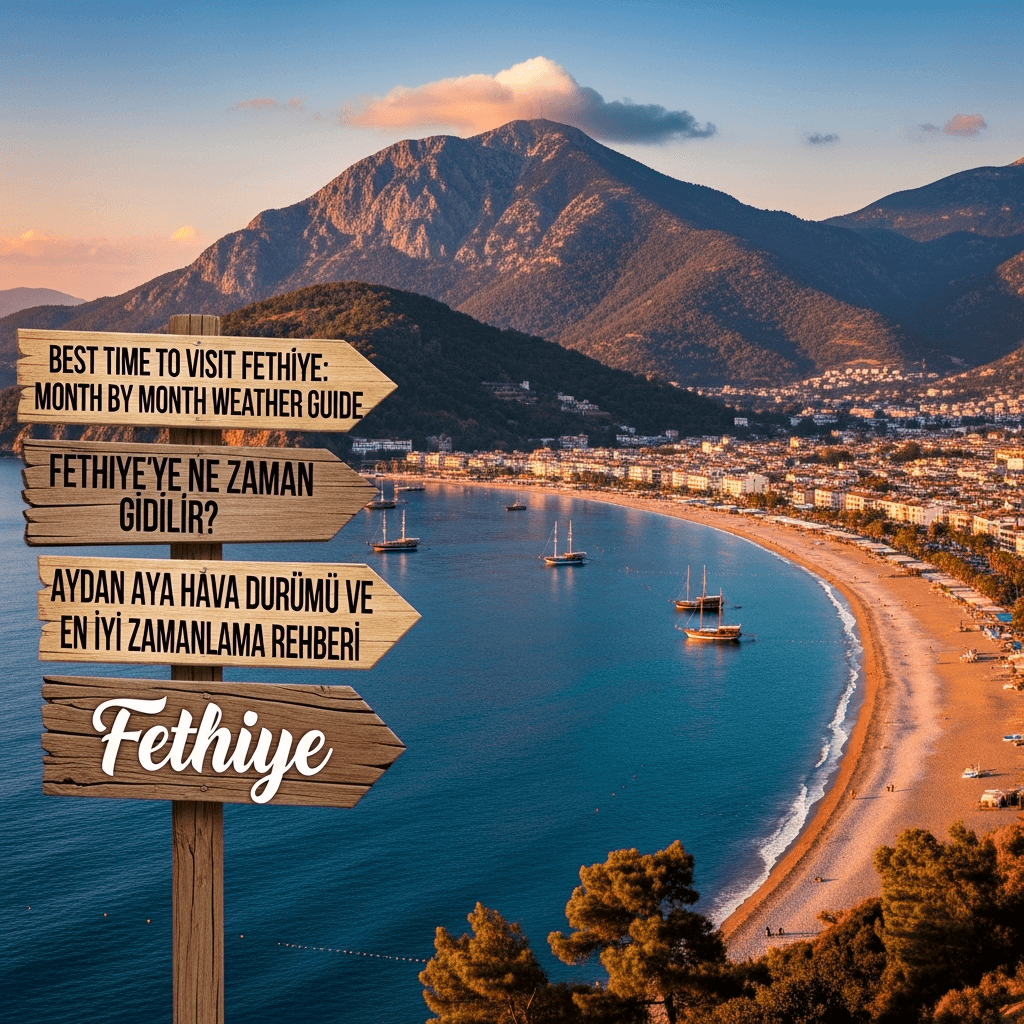
Best Time to Visit Fethiye: Month by Month Weather Guide
When is the best time to go to Fethiye? Detailed SEO weather guide month by month. Summer peaks, autumn sea temperatures and spring trekking tips.
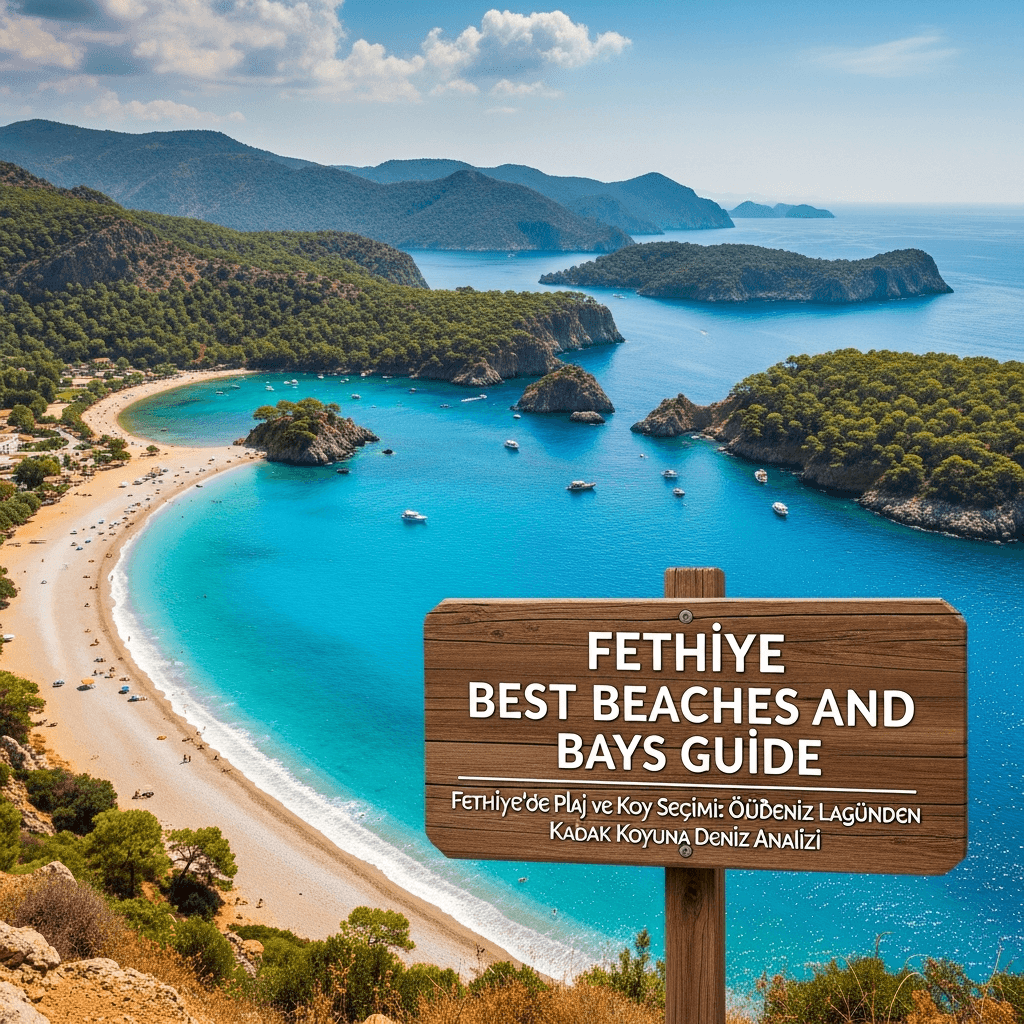
Fethiye Best Beaches and Bays Guide
Comprehensive SEO guide to Fethiye's best beaches. Compare Blue Lagoon, Belcekiz pebbles, Calis beach wind, and hidden Kidrak/Kabak bays.
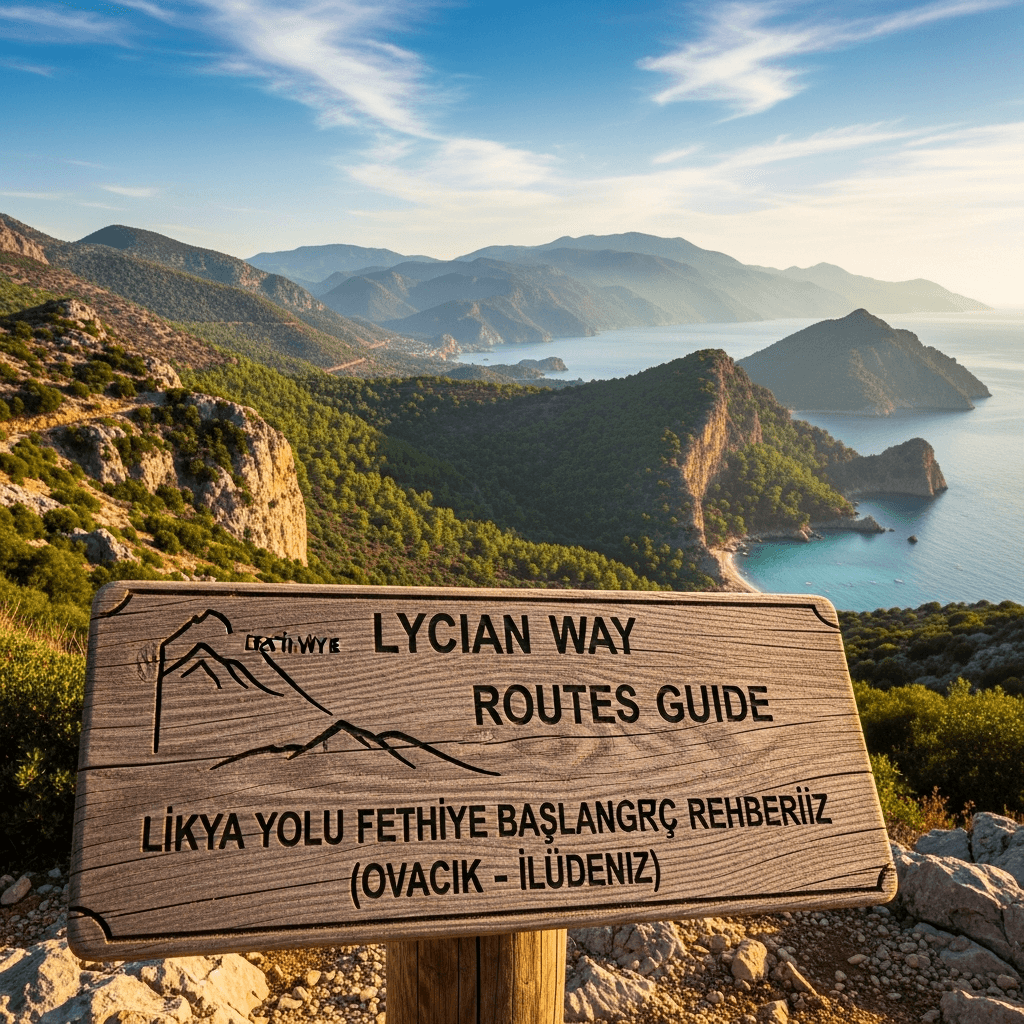
Lycian Way Fethiye Routes Guide
Ultimate Guide to starting the Lycian Way from Fethiye (Ovacik, Faralya, Kayakoy). Daily hiking routes, trails, maps, and offline tips with full SEO tables.
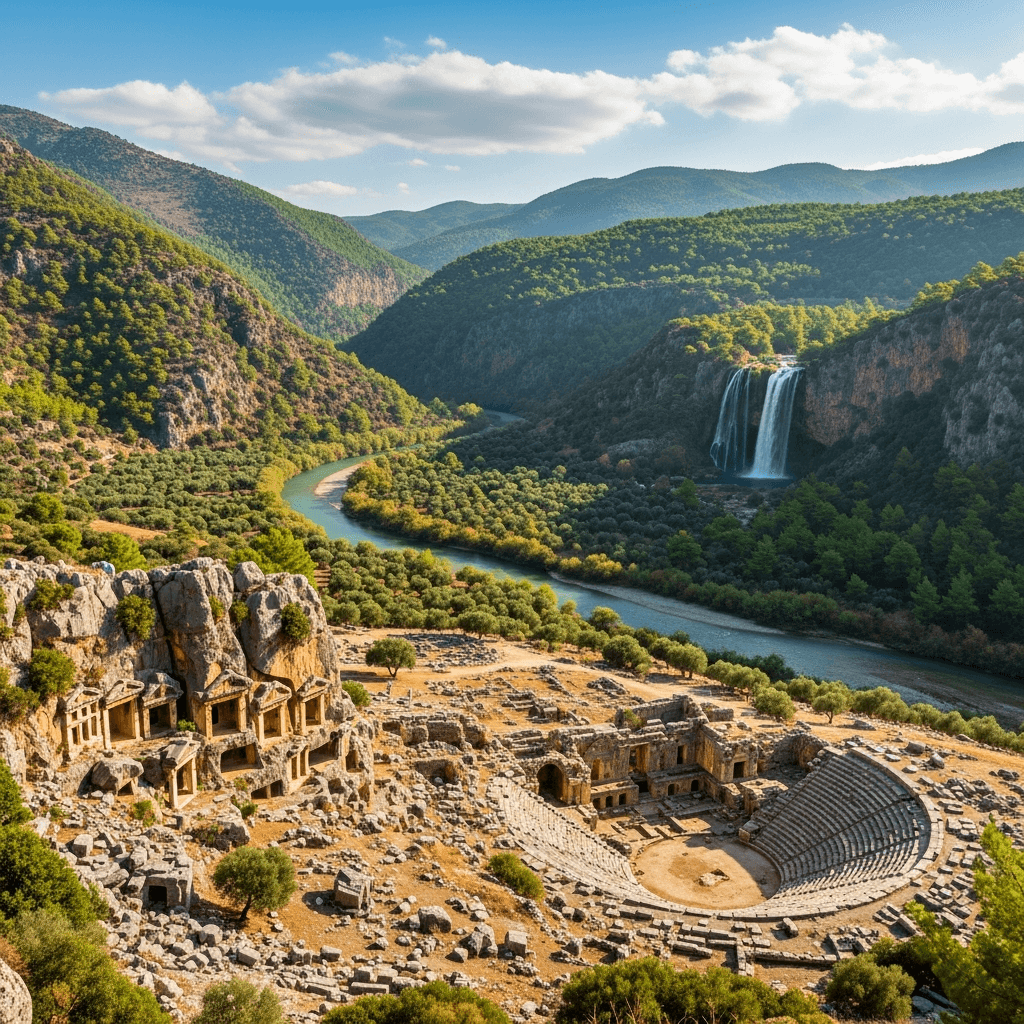
Tlos Ancient City & Yakapark Day Trip Guide
Ultimate Fethiye day trip SEO guide: Morning at Tlos Ancient City and Lycian rock tombs, afternoon lunch at Yakapark waterfalls, and Saklikent alternatives.
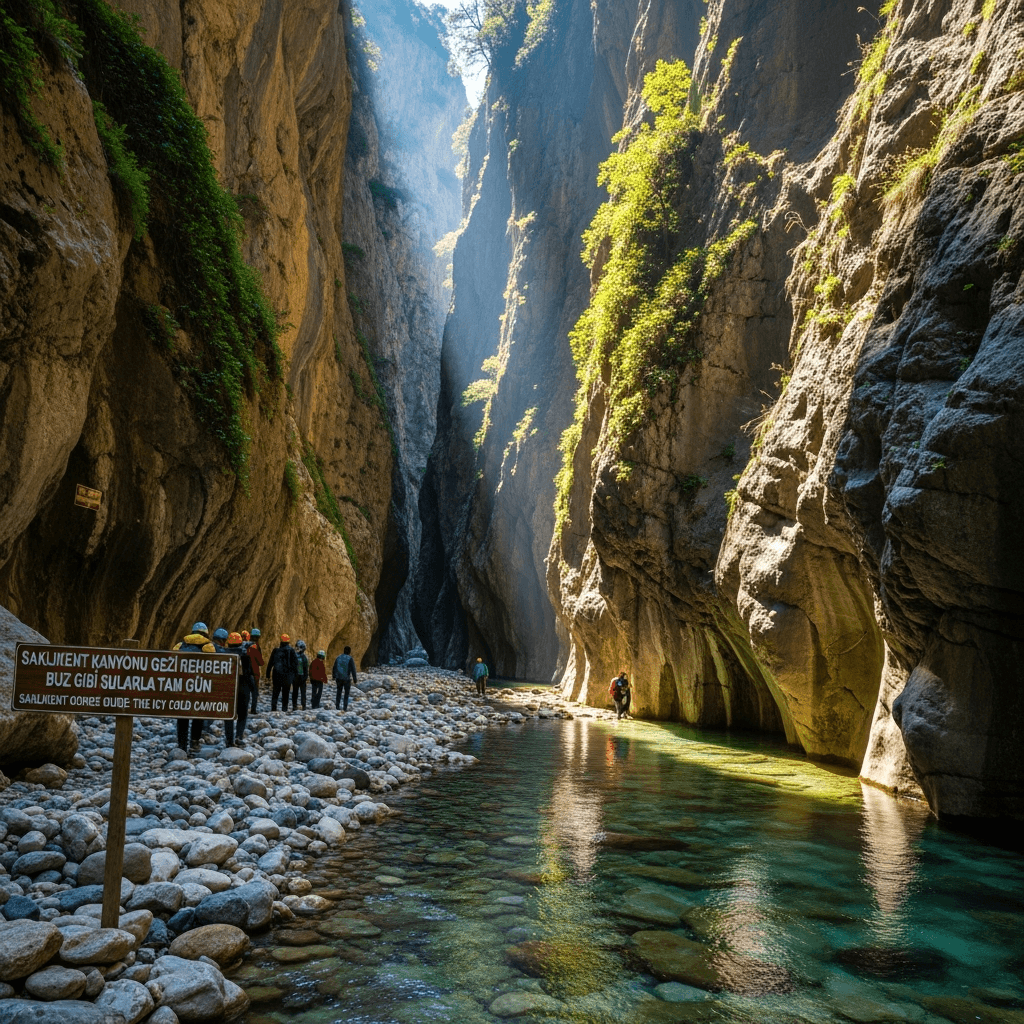
Saklikent Gorge Guide: The Icy Cold Canyon
Ultimate SEO guided Fethiye Saklikent Gorge and Canyon travel guide. Tips for hiking the icy river, mud baths, and comparing Gizlikent Waterfall.
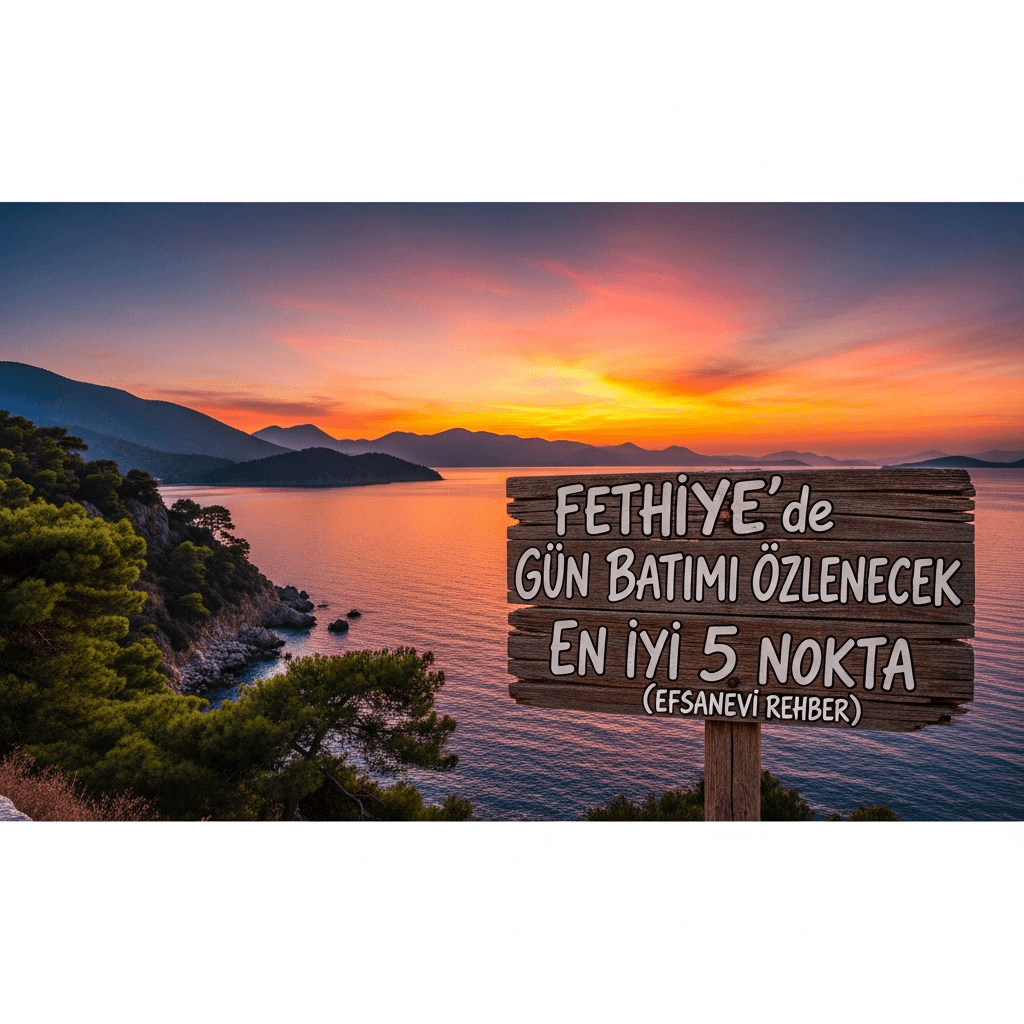
Best 5 Sunset Spots in Fethiye
Where to watch the best sunset in Fethiye? Detailed SEO guide for Calis beach, Babadag 1700m, and Sovalye island sunsets with tables and tips.
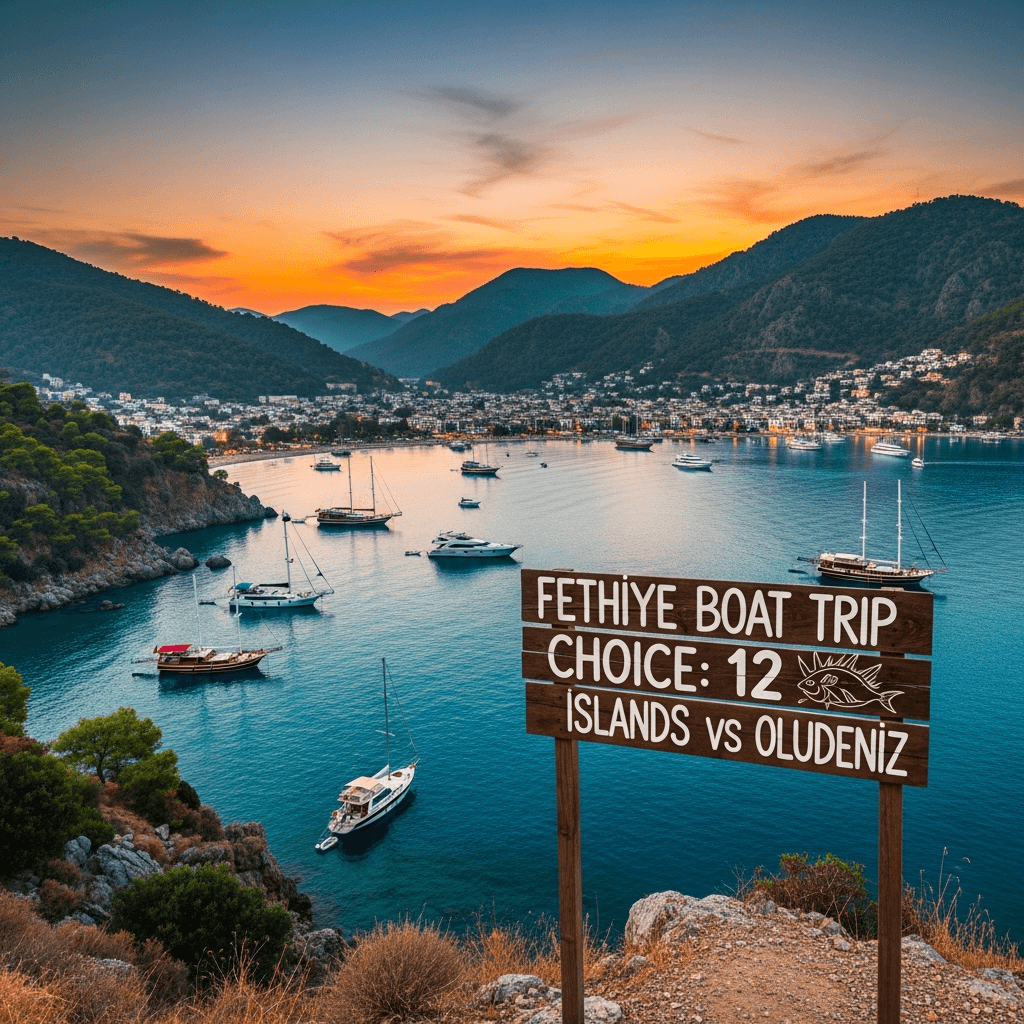
Fethiye Boat Trip Choice: 12 Islands vs Oludeniz
Ultimate comparison between the 12 Islands Boat Trip and the Oludeniz Butterfly Valley boat tour. Detailed SEO travel guide with tables and tips.
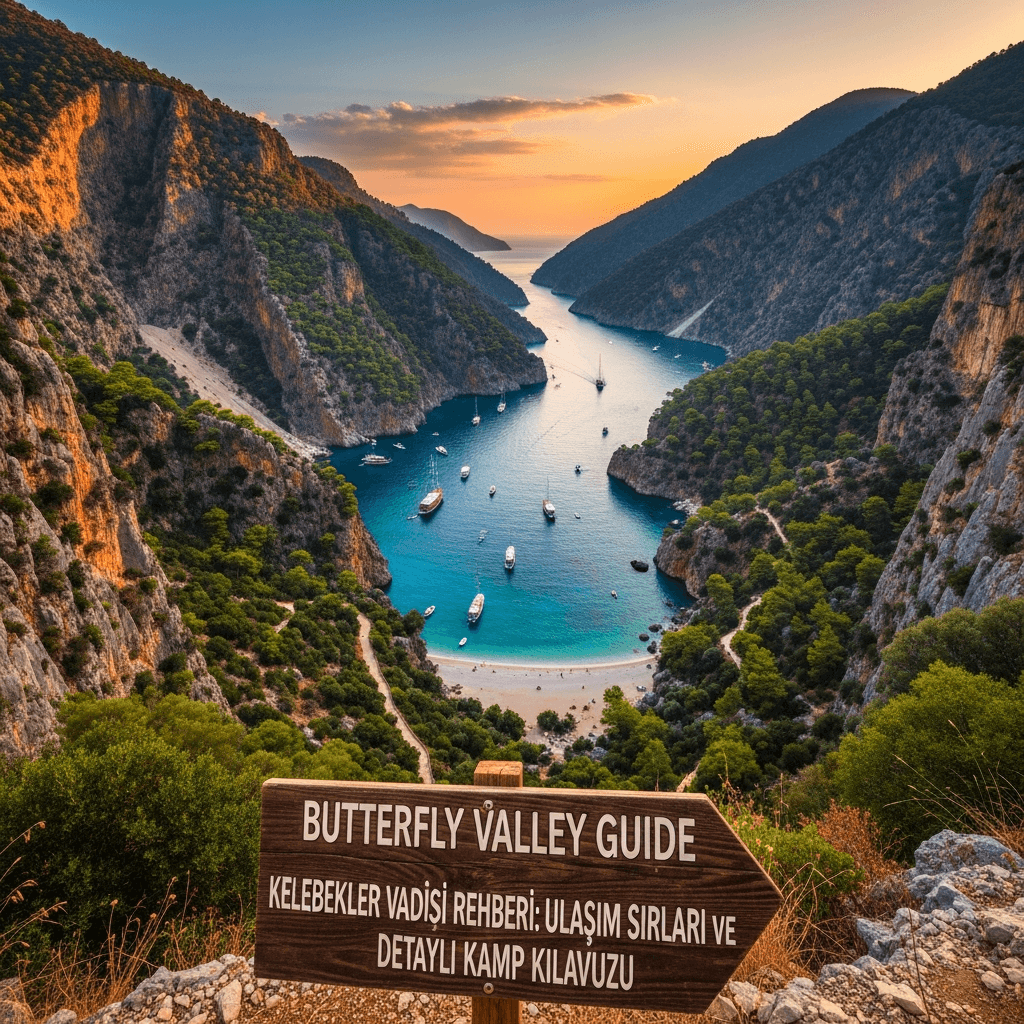
Butterfly Valley Guide
Ultimate SEO guided Fethiye Butterfly Valley travel guide. How to get there by boat or hike, best camping spots, and waterfall trekking tips.
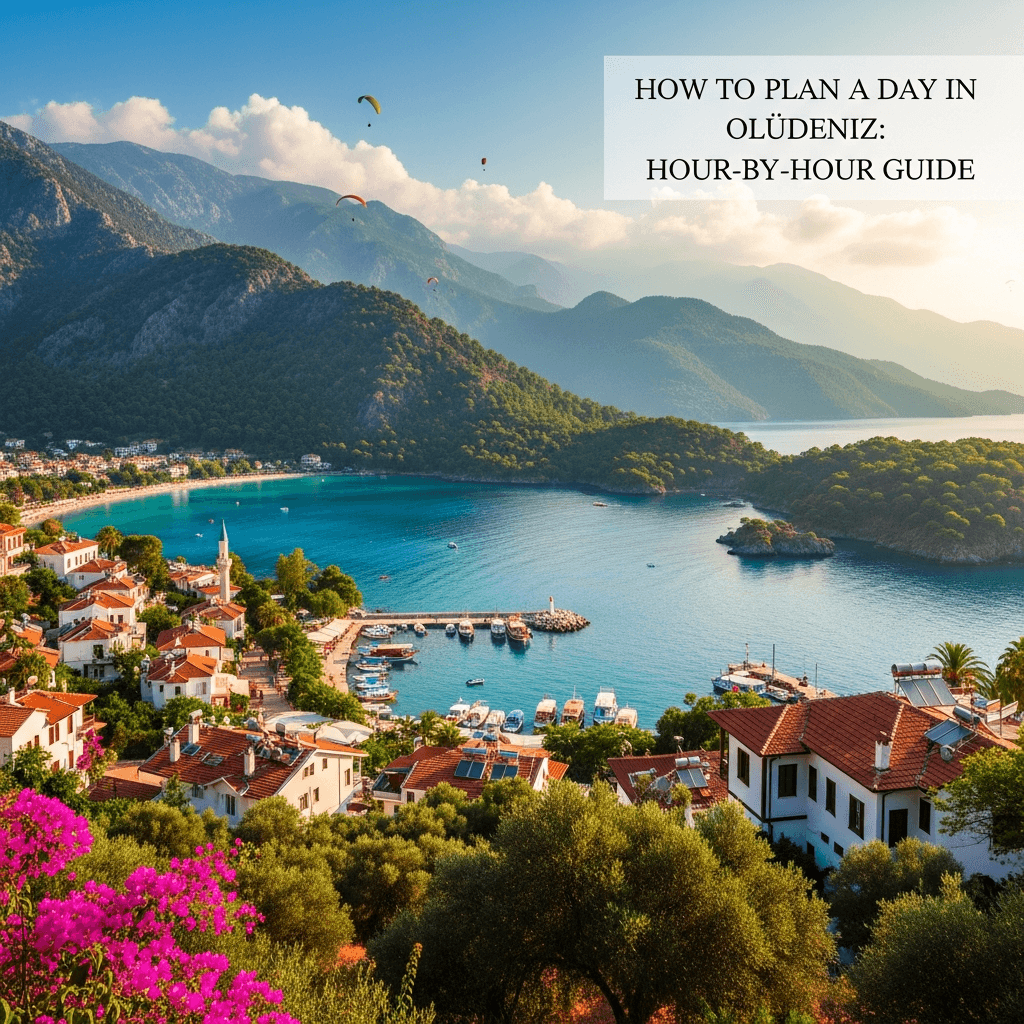
How to Plan a Day in Oludeniz: Hour-by-Hour Guide
An hour-by-hour itinerary for visiting Oludeniz, Kumburnu Blue Lagoon, Belcekiz beach, and the Babadag cable car. Essential tips for your holiday.
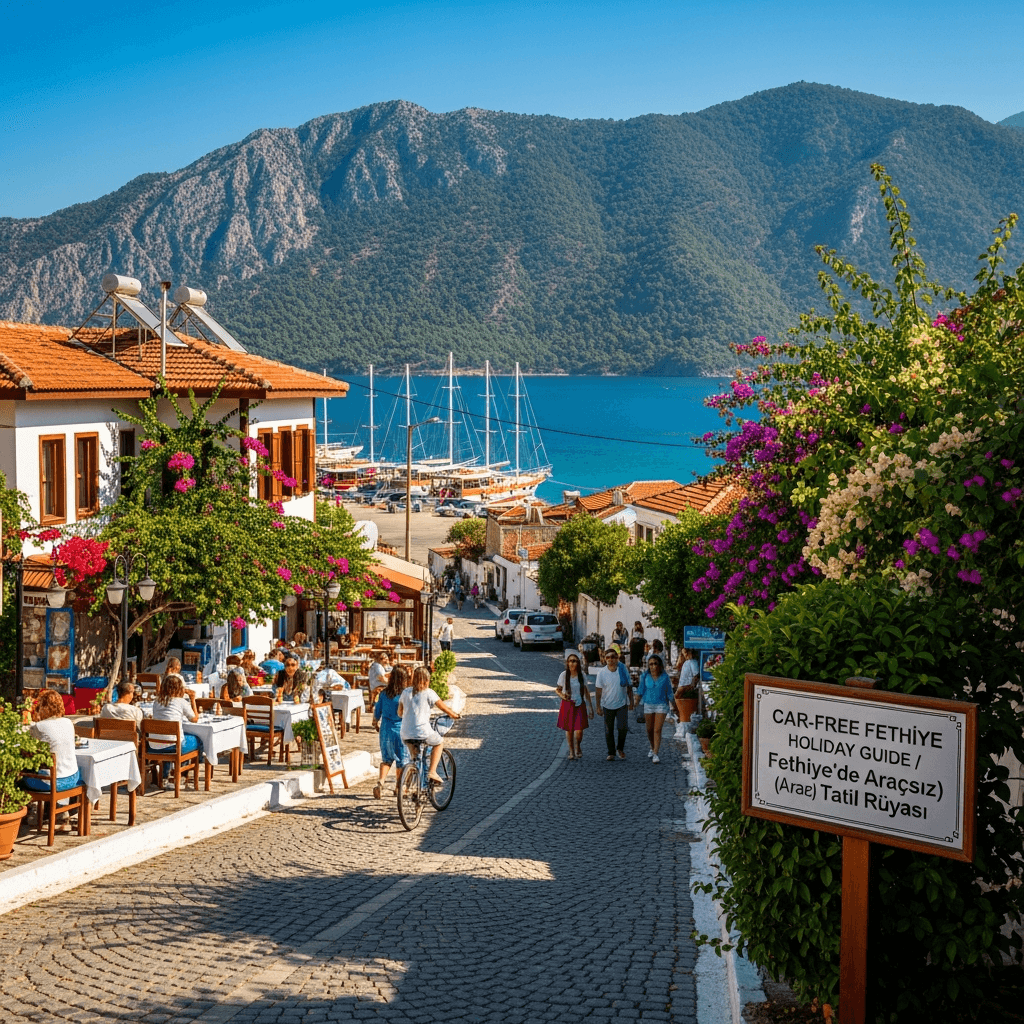
Car-Free Fethiye Holiday Guide
Discover how to enjoy a completely car-free holiday in Fethiye. Full transportation guide including water taxis, local dolmus, and walking trails.
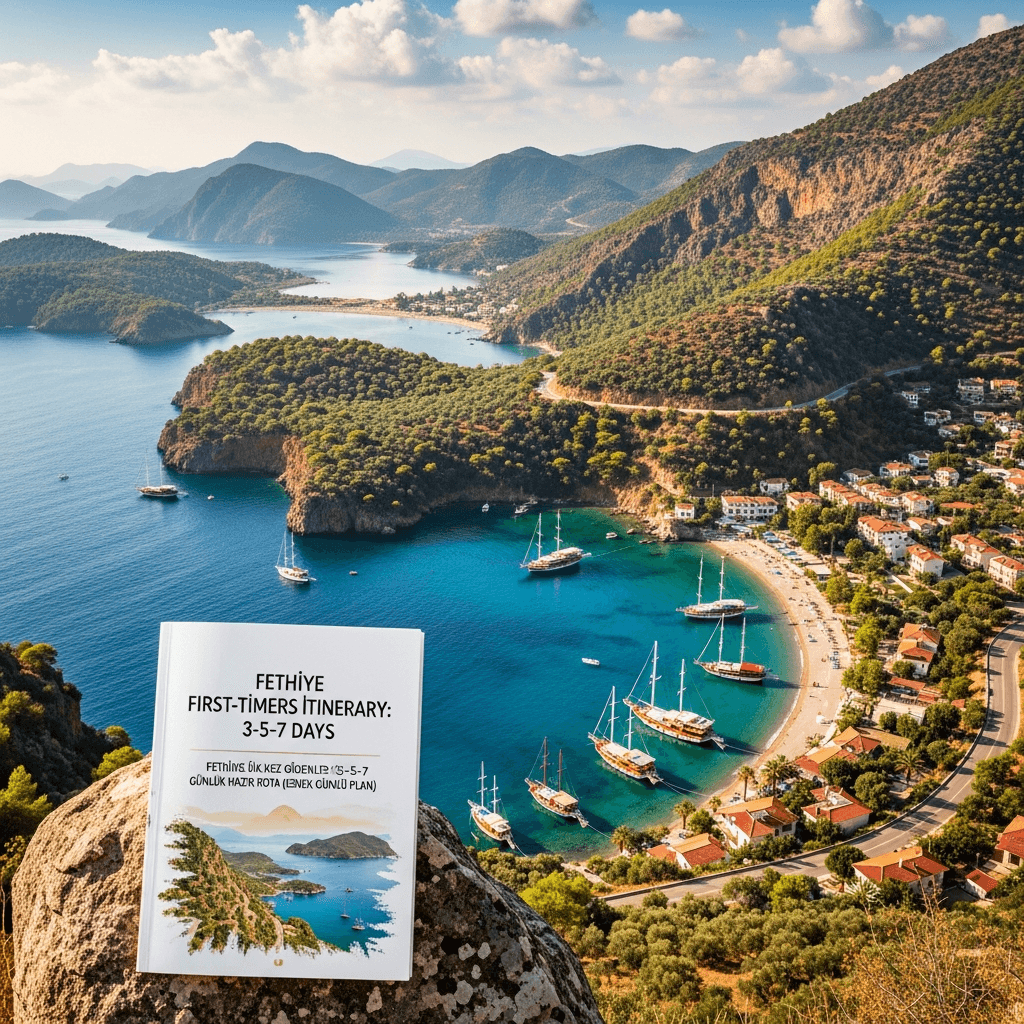
Fethiye First-Timers Itinerary: 3-5-7 Days
An optimized and flexible 3, 5, or 7-day itinerary for your first visit to Fethiye. Unmissable spots like Oludeniz, Saklikent Gorge and Babadag.

Where to Stay in Fethiye? Area & Base Selection Guide
Where to stay in Fethiye, Turkey? An extensive area-by-area guide choosing between Calis Beach, Oludeniz, Hisaronu, Ovacik and the Town Center.
Did you find this guide helpful?
Check out our other guides to discover more hidden gems in .
Explore All Guides